The RZA 2025 Winter School: land and sea dynamics

Dynamics between land and sea: a Breizh history of time
How can we think about socio-ecosystems through the prism of temporalities? This was the central question that animated the 2025 edition of the Winter School of the Réseau des Zones Ateliers (RZA), organised this year in the unique setting of the bay of Brest, in Logonna-Daoulas, from 3 to 7 March 2025.
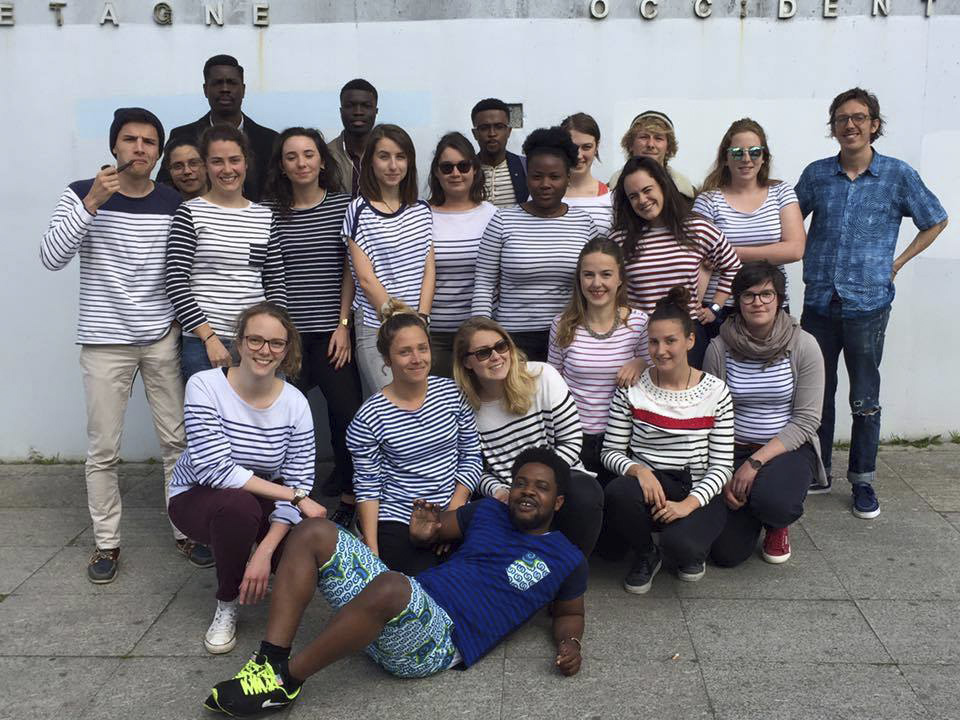
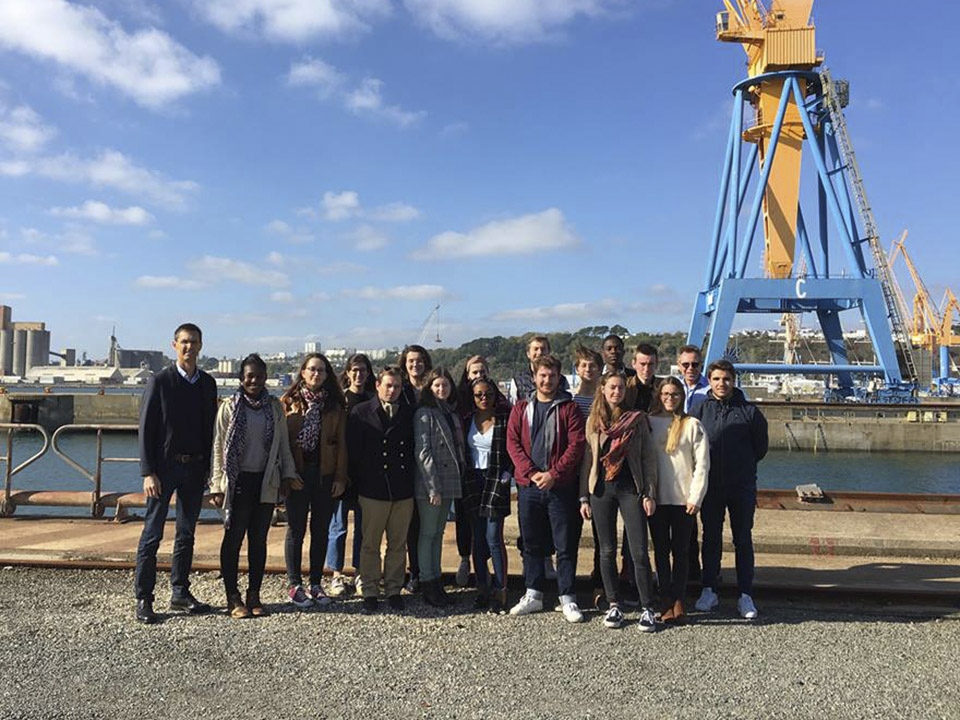
For three days, 25 young researchers (doctoral and post-doctoral students, ATER) immersed themselves in the dynamics of the land-sea continuum, exploring how time scales influence scientific research, land management and public policy.
An interdisciplinary and immersive programme
On the programme for this intense week, under a radiant sun:
The winter school opened with three inspiring lectures and talks:
- The carbon cycle on the scale of geological time by Stefan Lalonde,
- The disturbances of long time by Rémi Beau
- The time of increased meaning by Olivier Ragueneau
Four themed workshops to experiment
The participants were divided into four groups, to enable them to follow four workshops each exploring a key axis of the land-sea continuum:
- Water quality and the transfer of contaminants in the land-sea continuum.
- This workshop focused on issues related to water quality at the bottom of the bay of Brest, including toxic microalgae (Alexandrium minutum) and antibiotic resistance. Samples and measurements were taken at sea (with the ship Hésione) and in the surrounding rivers to assess the physicochemical and bacteriological parameters in the land-sea continuum. The samples were analysed in a mobile laboratory at Moulin Mer.
- Socio-ecosystem trajectory of an agro-marine system: Ecological time and the time of societies, complexity of renewed governance
- This workshop explored the socio-ecosystemic trajectory of the land-sea continuum in the roadstead of Brest, through a multidisciplinary approach combining biology, ecology, history, archaeology, sociology and governance. Four sub-workshops offered opportunities for field observation, meetings with local stakeholders (oyster and scallop farmers, fishermen, farmers, elected representatives of Brest Métropole, TerraRade) and collective reflections on the ecological, social and political dynamics at work in this agro-marine territory. The aim was to foster a renewed understanding of this continuum and to consider more coherent and sustainable forms of governance.
- Methodology in arts and sciences – Thinking continuum and temporalities: The contribution of arts and sciences to renewing our view of socio-ecosystems.
- This workshop offered a transdisciplinary exploration of the links between the arts, sciences and society to renew our relationship with coastal socio-ecosystems and watersheds. Using concrete examples (Molène, Aulne Maritime, Piave river), the participants discovered research-creation and research-action approaches integrating long time frames, traces and sensitive representations of the living world. The aim was to develop innovative methods of co-constructing research and to foster a common culture across disciplines through artistic practices.
- Coastal risk management through role-playing in a serious game.
- This workshop offered a serious game scenario to explore the issues of coastal risk management in a fictitious but realistic context with the serious game developed by AMURE; Coastal Risks in Plonevez-les-Flots. The participants, in the shoes of agents from different municipal services, had to arbitrate between budgetary constraints, the expectations of the inhabitants and reducing vulnerability to climate change. The aim is to promote a systemic and interdisciplinary approach to the complex issues at the Human-Nature interface, while questioning collaborative practices.
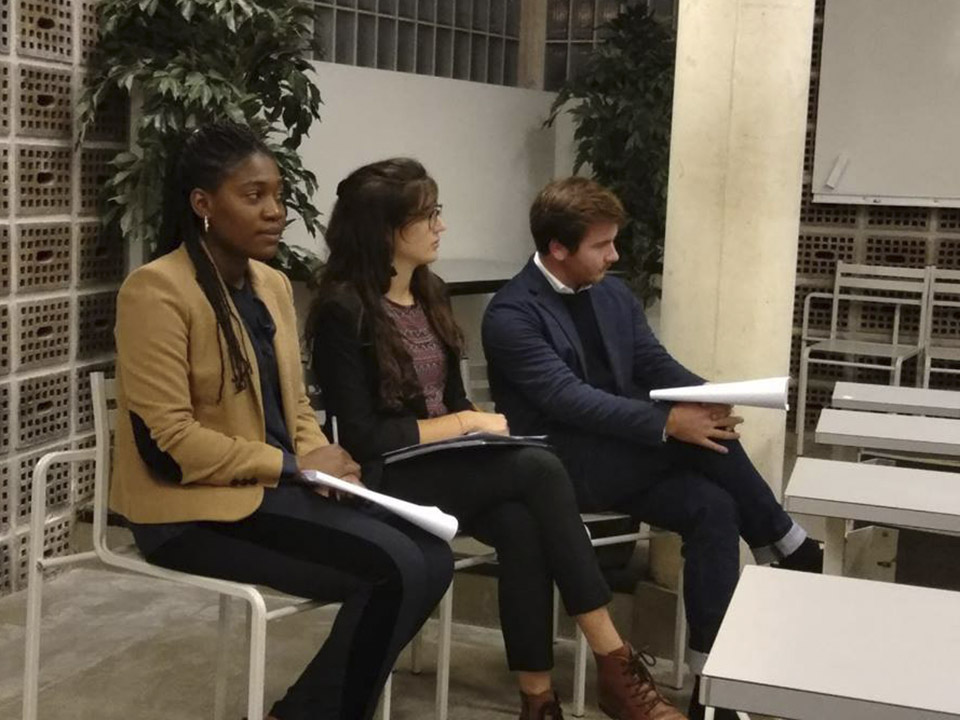
Two evenings were organised: one on the scientific mediation of the Brest Iroise Workshop Zone, with: the ISblue SEALEX-PACTE Project stand (Clara Valero and Lucas Bosseboeuf), the Evol’Iroise interactive poster (Sébastien Hervé & Aurélie Penaud) and the Virtual Reality stand (Maxime Kernec and Charlotte Gasne–Destaville) and a participatory workshop on the commitment of researchers organised by Mélanie Raimonet and Olivier Ragueneau.
An original and creative presentation
Throughout the week, the discussions were enriched by the PIBA troupe, which accompanied the participants in an innovative presentation combining science, radio narration and staging. A great way to explore how to convey the complexity of socio-ecosystems in a different way!
A space for dialogue and engagement
Far from being a simple academic seminar, this winter school was a real space for co-construction, promoting exchanges between disciplines and local stakeholders. How can we integrate issues of temporality into our research and actions? This question ran through all the discussions, and brought out new perspectives for thinking about socio-ecosystems.
 RZA 2025
 Manuelle Philippe | UBO
 RZA 2025
 RZA 2025
 RZA 2025
 Emma Roussel
 Clara Valero | UBO
 Mélanie Raimonet | CNRS
 Manuelle Philippe | UBO