DAUNPAPUA campaign in Papua New Guinea

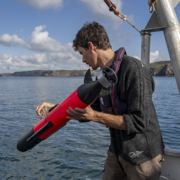
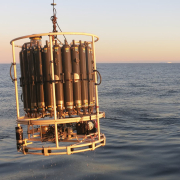
The DAUNPAPUA oceanographic campaign, co-led by our colleague Eric Pante (LEMAR) and Sarah Samadi (MNHN), in collaboration with Ralph Mana (University of Papua New Guinea), began on 18 June and will run until 29 July 2025 in the waters of Papua New Guinea aboard the oceanographic vessel ANTEA. This campaign is the fifth expedition of the Tropical Deep-Sea Benthos (TDSB) programme in Papua New Guinea (PNG) and aims to complete the mapping of deep-sea benthic biodiversity in one of the richest areas in the world: the exclusive economic zone (EEZ) of PNG.
Scientific objectives
The DAUNPAPUA campaign has three main objectives:
- To explore the southern EEZ of PNG, a region that remains largely unknown despite its potential marine biodiversity, particularly Milne, Goodenough and Dyka Ackland bays, and the Gulf of Papua.
- Study the connectivity mechanisms between deep-sea benthic communities in the region to understand how species disperse and evolve.
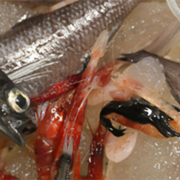
- Analyse the evolutionary processes responsible for the faunal richness of the southwestern Pacific through sampling in various habitats: seamounts, canyons, cold seeps, etc.
These objectives are part of an integrative taxonomy approach combining morphological, genetic and ecological data, aimed at better understanding the biogeographical structure and evolutionary dynamics of deep-sea species.
Historical and scientific background
The TDSB programme, launched in the 1970s, has organised more than 70 expeditions and published over 1,500 scientific articles. In PNG, previous expeditions (BIOPAPUA, MADEEP, PAPUANIUGINI, KAVIENG) have led to the discovery of hundreds of new species, consolidating the region’s role as a global marine biodiversity hotspot. However, much of the southern EEZ remains unexplored.
Historically, the region has been poorly covered by major oceanographic expeditions in the 20th century. The few existing data on deep-sea fauna in PNG come from highly specialised hydrothermal areas, leaving most of the benthic biodiversity still unknown.

DAUNPAPUA campaign cruiseplan
An exceptional territory
Papua New Guinea is located in the heart of the Coral Triangle, an area that is home to around 75% of the world’s coral species. Although terrestrial and coastal biodiversity is relatively well documented, the deep-sea fauna remains largely unknown. The DAUNPAPUA project aims to fill this gap by providing crucial data for fundamental research and conservation.
Awareness raising and local engagement
DAUNPAPUA is not limited to research: it also includes an active awareness-raising component. Two science outreach programmes are planned in Port Moresby and Alotau, in partnership with UPNG. They will bring together tribal leaders, representatives of local institutions and the French Embassy for presentations and exhibitions of specimens. These actions aim to promote scientific knowledge among local communities and encourage dialogue on the sustainable management of marine resources.
International challenges: UNOC 2025
The campaign is part of the 3rd United Nations Ocean Conference (UNOC 2025). It directly addresses the sustainable development goals related to ocean conservation (SDG 14) by strengthening knowledge of deep-sea ecosystems, which are essential but vulnerable and often overlooked in marine protection strategies. The integration of DAUNPAPUA data into major international databases will contribute to better global governance of marine biodiversity.
The DAUNPAPUA campaign is an international scientific, diplomatic and educational initiative. It strengthens the role of the MNHN in marine biodiversity research and affirms France’s commitment alongside Southern countries to preserving the world’s natural heritage.
Keep up with the DUANPAPUA campaign on Eric PANTE’s blog