Fish acoustics for monitoring the effects of overfishing and climate change on food security in West Africa

,

An acoustic study, whose first author is a Senegalese former thesis student of Lemar, has revealed a notable northward shift in the spatial distribution of small pelagic fish species exploited in the waters of the Sub-Regional Fisheries Commission (northwest Africa). The results, covering a period of two decades of acoustic halieutic surveys conducted by sub-regional acoustics experts aboard the F. Nansen vessel (IMR, Norway), highlight the impact of rising sea surface temperature and changes in upwelling intensity on marine ecosystems in the sub-region. Mauritania and Senegal are observing a strong increase in sea surface temperature and a decrease in its primary productivity, while the region further north is experiencing a continuous increase in upwelling. Significant spatial anomalies in sea surface temperature have contributed to the northward shift of several small pelagic fish species, including Sardinella aurita (round sardinella), species highly prized in Senegal.

The study emphasizes that the Senegalo-Mauritanian zone has experienced the most pronounced warming of surface waters among all intertropical regions in the world in recent decades. The study identified significant anomalies in sea surface temperature around Cape Blanc and to the south, ranging from 0.1 to 0.3 °C per decade, influencing fish distribution. During the study period, Sardinella aurita displayed a northward shift of approximately 180 km, coinciding with an increase in sea surface temperatures and reduced primary productivity in the south. The northward shift of small pelagic fish poses potential economic and social challenges, particularly for countries such as Senegal, where fisheries are a source of numerous jobs and contribute to food security, and Mauritania, where fisheries contribute significantly to gross domestic product.

Fishmeal factories and fishing fleets are already contributing to severe overexploitation of small pelagics, particularly Sardinella aurita. The effects of climate change (cumulative with those of overexploitation) exacerbate the pressure on these valuable fishery resources. Changes in fish distribution can disrupt the entire marine food chain, affecting biomass production and species composition.

The study underscores the need for regular monitoring and increased research efforts to better understand the dynamics of this marine ecosystem and ensure the sustainability of fishery resources, vital for the countries concerned. This is particularly important for protecting food security and the economic well-being of coastal communities in West Africa.

The results call for strengthening national fisheries research structures, expertise in acoustic halieutics, and the need for sub-regional collaboration on transboundary fish stocks to prevent potential fishing-related conflicts and manage resources sustainably. Moreover, it is urgent to address overfishing and the impacts of fishmeal production, which adds an additional threat to the effects of climate change on exploited small pelagics.

The CRODT[1], IMROP[2], INRH[3], FD[4] and IRD, are committed to advancing marine research. They emphasize the importance of adaptive management strategies, concerted at the sub-regional level (countries of the Sub-Regional Fisheries Commission (CSRP)), to address current and future challenges posed by climate change and overfishing.

Scientific Contact

Patrice.Brehmer@ird.fr *

*Corresponding author of the scientific publication

Article Link (Springer nature, Scientific report)

Abdoulaye Sarre, Hervé Demarcq, Noel Keenlyside, Jens-Otto Krakstad, Salaheddine El Ayoubi, Ahmed Mohamed Jeyid, Saliou Faye, Adama Mbaye, Momodou Sidibeh, & Patrice Brehmer*. Climate change impacts on small pelagic fish distribution in Northwest Africa: trends, shifts, and risk for food security Scientific Report, 12434 (2024). https://doi.org/10.1038/s41598-024-61734-8

Photographs, including aerial and underwater:

https://multimedia.ird.fr/IRD/search.do?q=Brehmer+Patrice&lang=fr


[1] Centre de recherche océanographique de Dakar Thiaroye, Senegal

[2] Institut Mauritanien de Recherches Océanographiques et de Pêches

[3] Institut National de Recherche Halieutique, Morocco

[4] Fisheries Department, The Gambia

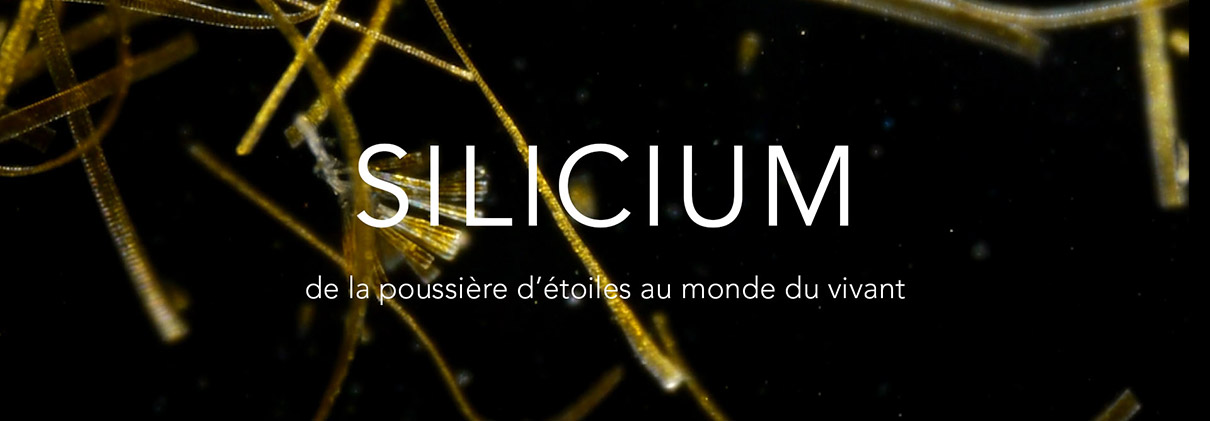
SILICON, from stardust to the living world

, ,

For several decades, the « Silicon Group » of the Institut Universitaire Européen de la Mer (IUEM) has been studying the silicon cycle on an international scale. In 2020, it created the “Silica School”, whose major themes are summarized in this documentary film. Billions of years ago, silicon was created in the universe by stellar nucleosynthesis. It’s not beyond the realms of possibility that this element serves as the basis for other forms of life in the universe. On planet Earth, it is the second most abundant element, after oxygen. It is a component of numerous minerals whose interaction with the aqueous environment generates a chemical form that can be assimilated by living organisms. Although the oceanic silicon cycle is currently in equilibrium, disruptions are to be expected in the context of ongoing global change.

This documentary film has been imagined by Paul Treguer, produced by Sébastien Hervé and benefits from a collaboration with Océanopolis, the center for scientific, technical and industrial culture in Brest (France).

NAWRAS Project: Workshop on Developing Legal Indicators

, , ,

Developing Legal Indicators in Environmental Law

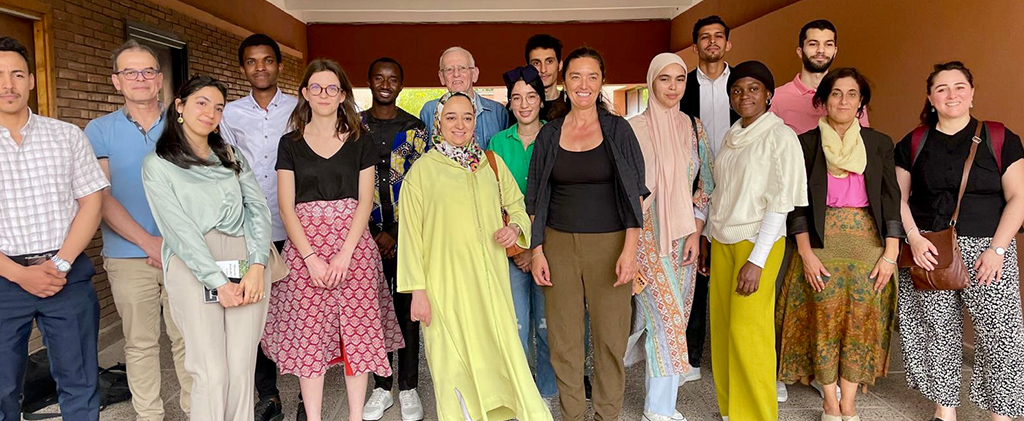
The working meeting on legal indicators as part of the Nawras project was held on March 18 and 19, 2024, in the Meeting Room of the Jabir Center / Department of Computer Science of the Faculty of Sciences Semlalia (Cadi Ayyad University – Marrakech).

The 20 participants were able to attend a presentation by Professor Michel Prieur on the importance of developing legal indicators in environmental law. Christophe Bastin then presented the method developed by the International Center for Comparative Environmental Law (CIDCE). The progress of the Nawras project was then presented by Marie Bonnin, Jihad Zahir and Youssef Al Mouatamid. During the next two half-days, the participants debated with the invited researchers (Thais Nunnez-Rocha – environmental economist – University of Orléans, Adrien Comte – IRD LEMAR in visio and Sophie Lanco – IRD Marbec in visio) on the variables and metrics selected as part of the project and on the possibilities of joint publications.

Temporal monitoring of mercury concentrations in tuna, the work of Anaïs Médieu in the press

,

The work of Anaïs Medieu on the temporal monitoring of mercury concentrations in tuna has recently been the subject of numerous articles in the national and international press:

As not all of these publications are open access, here is a summary of Anaïs’s results.

The stability of mercury concentrations in tuna since 1971 reflects the inertia of the oceans and calls for massive reductions in emissions to achieve the objectives of the Minamata Convention.

Humans are exposed to toxic methylmercury mainly by consuming marine fish that bioaccumulate methylmercury in the oceans. The Minamata Convention on Mercury of the UN aims to reduce human exposure to mercury through the reduction of anthropogenic emissions. But has this reduction effort led to a reduction in methylmercury concentrations in the oceans and marine fish? An international team of researchers, coordinated by IRD, addressed this question by compiling nearly 3000 mercury measurements in tuna samples captured between 1971 and 2022 in the Pacific, Indian and Atlantic Oceans.

The study reveals that mercury concentrations in tuna have remained globally stable since 1971, except in the northwest Pacific where they significantly increased at the end of the 1990s, probably in connection with the massive increase in anthropogenic emissions associated with the intensive use of fossil fuels for electricity production in Asia. Elsewhere, the stability of mercury levels in tuna does not reflect the global decrease in mercury levels in the atmosphere resulting from emission reduction policies. The researchers attribute this stability in tuna to the inertia of the oceans and the stock of mercury historically emitted that continues to feed the surface or subsurface waters where tuna live. This mercury was emitted decades, if not centuries ago, and does not yet reflect the effects of emission reductions in the atmosphere.

The researchers also simulated the impact of different emission reduction policies on mercury levels in the oceans. Even the strictest emission policy would take 10 to 25 years to initiate a decrease in mercury concentrations in the oceans. These results highlight the need for a global effort to achieve the objectives of the Minamata Convention to reduce emissions and call for continued and long-term global monitoring of mercury levels in marine life.


Hydrothermal mercury: the natural history of a contaminant

,

Our colleague Hélène Planquette participated in an international study coordinated by the CNRS aiming to estimate the contribution of hydrothermal sources to the mercury stock present in the oceans.

This study has just been published in the journal Nature Geoscience and is the subject of a CNRS press release:

An international team of researchers, coordinated by the CNRS (see inset), has established the first global estimate of hydrothermal mercury (Hg) emissions from mid-ocean ridges. The UN Minamata Convention on Mercury aims to reduce human exposure to toxic mercury by reducing anthropogenic emissions. We are primarily exposed through the consumption of fish that bioaccumulate Hg from the ocean. The current paradigm is that anthropogenic mercury emissions (currently 3,100 tons per year) are responsible for a 21% increase in the global oceanic mercury reservoir. This estimate is inaccurate because we do not know how much natural mercury was present in the ocean before the start of anthropogenic emissions.

We are also unable to quantify the impact of anthropogenic emissions on Hg levels in fish. Hydrothermalism is the only direct source of natural Hg to the ocean. Previous studies, based solely on hydrothermal fluid measurements, suggested that hydrothermal Hg inputs could range from 20 to 2,000 tons per year. This new study used measurements of hydrothermal plumes, seawater, and rock cores in addition to fluid measurements from the Trans-Atlantic Geotraverse (TAG) hydrothermal source on the Mid-Atlantic Ridge.

The combination of observations suggests that the majority of enriched Hg in the fluids would be diluted in seawater, and a small fraction would precipitate locally. Extrapolation of the results indicates that the overall hydrothermal Hg flux from mid-ocean ridges is low (1.5 to 65 tons per year) compared to anthropogenic Hg emissions. Although this suggests that the majority of Hg in the ocean is of anthropogenic origin, it also raises hope that strict implementation of emission reductions under the Minamata Convention will reduce mercury levels in fish and human exposure.


Article Reference:

Torres-Rodriguez, N., Yuan, J., Petersen, S. et al. Mercury fluxes from hydrothermal venting at mid-ocean ridges constrained by measurements. Nat. Geosci. (2023).