
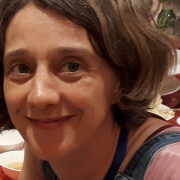
Sabine ROUSSEL
National
ANR PRCE
Start Date
27/09/2026
End Date
27/09/2026
Abalone is a low trophic herbivorous gastropod feeding on seaweed. It has been consumed for centuries as a traditional dish in many parts of the world. This species is fished professionally and recreationally in France. However, wild abalone stocks have declined sharply in France due to massive mortalities caused by a pathogenic bacterium, Vibrio harveyi, with a mortality up to 80% in Brittany and Normandy at the end of the nineties when sea-water temperature reached over 18°C in summer. Impacted populations have not recovered. Ranching, which is an extensive rearing method consisting of implanting juveniles in the natural environment, stock enhancement, which consists of increasing or maintaining fisheries, and restocking, which consists of implanting juveniles to re-establish disappeared stocks, could be opportunities to develop new opportunities for the preservation of this emblematic species. The juveniles are reared in nurseries and produced from wild or domesticated broodstock depending of the objective. The implantation of abalone for stock enhancement has been carried out for many years in countries such as Japan, Mexico and South Africa. However, the technique for implanting abalone in the natural environment is not currently mastered in France, nor is the equipment associated with these implantations. Moreover, certain technical obstacles have still to be overcome. Technical obstacles remain, with a mortality of 90% in average, observed mainly just after seeding. ORMER, an experimental development project, aims at developing innovative tools to enable the establishment of sustainable abalone restocking with a transdisciplinary approach. The following hypothesis will be tested: 1) Initial mortality can be minimised by conditioning hatchery juveniles to predators and using optimised seeding techniques 2) improved knowledge of the ecosystem carrying capacity of seeding sites considering juvenile density and size can improve survival in ranching and stock enhancement programmes at an operational scale 3) Better understanding of the wild populations genetic structure, the assessment of health status and immune priming of juveniles prior to seeding can mitigate the risk associated with reseeding operations 4) Assessment of social acceptability, as well as long-term economic viability are necessary keystones to ensure sustainable development of restoration, stock-enhancement or ranching programmes. Partners from the socio-professional sector as well as researchers from different disciplines (ethology, ecology, genetics, pathology, economics and sociology) will work together to develop sustainable stocking programmes to provide the necessary keys to decision-makers (business leaders, fishers, national parks) on social, economic and technical aspects. The expectations of each stakeholder (professional and recreational fishers, aquaculture, ecological rehabilitation) will be included into the project.
[av_slideshow img_copyright='left' size='no scaling' control_layout='av-control-default' slider_navigation='av-navigate-arrows av-navigate-dots' nav_visibility_desktop='' nav_arrow_color='' nav_arrow_bg_color='' nav_dots_color='' nav_dot_active_color='' img_copyright_font='' av-desktop-font-img_copyright_font='' av-medium-font-img_copyright_font='' av-small-font-img_copyright_font='' av-mini-font-img_copyright_font='' animation='slide' transition_speed='' autoplay='true' interval='5' img_scale='' img_scale_end='10' img_scale_direction='' img_scale_duration='3' img_scale_opacity='1' conditional_play='' img_scrset='' lazy_loading='disabled' alb_description='' id='' custom_class='' template_class='easy-slider-text-white' av_uid='av-ug0rdpg' sc_version='1.0']
[av_slide id='205178' av_uid='av-oga3rac'][/av_slide]
[av_slide id='205180' av_uid='av-25i1nz8'][/av_slide]
[av_slide id='205182' av_uid='av-gxj8euc'][/av_slide]
[av_slide id='205184' av_uid='av-dh0nt9g'][/av_slide]
[av_slide id='205186' av_uid='av-74yg95w'][/av_slide]
[/av_slideshow]
Laboratory Members
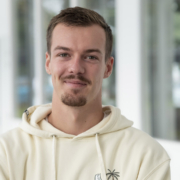
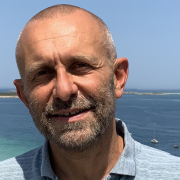
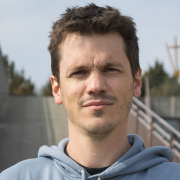


Contributors
IHPE, Ifremer
Marie-Agnes Travers, Caroline Montagnani, Gaelle Courtay, Yannick Labreuche
AMURE, IUEM
Pascal Raux, José Perez Agundez, Céline Jacob, Malor Bars
France Haliotis
Sylvain Huchette, Maryvonne Leroux, Guillaume Colin (France Haliotis)

